


Fire Making Survival: Essential Techniques for the Outdoor Adventurer
Fire Making Survival: Tips and Techniques for Beginners
How do you build a fire in a survival situation? Making a fire for survival requires the right techniques and equipment. This article will teach you step-by-step how to start and maintain a fire, even in the most challenging weather conditions.
Key Points
- The basic materials needed for building a fire are tinder, thin twigs, and thicker branches; these materials are essential for a stable and long-lasting fire.
- There are different fire structures, such as the pyramid fire, star fire and reflector fire, each specifically designed for different situations and needs in nature.
- Safety and regulations are crucial when making a fire; always consider the distance to flammable materials and check local regulations before lighting a fire.
Basic fire making supplies
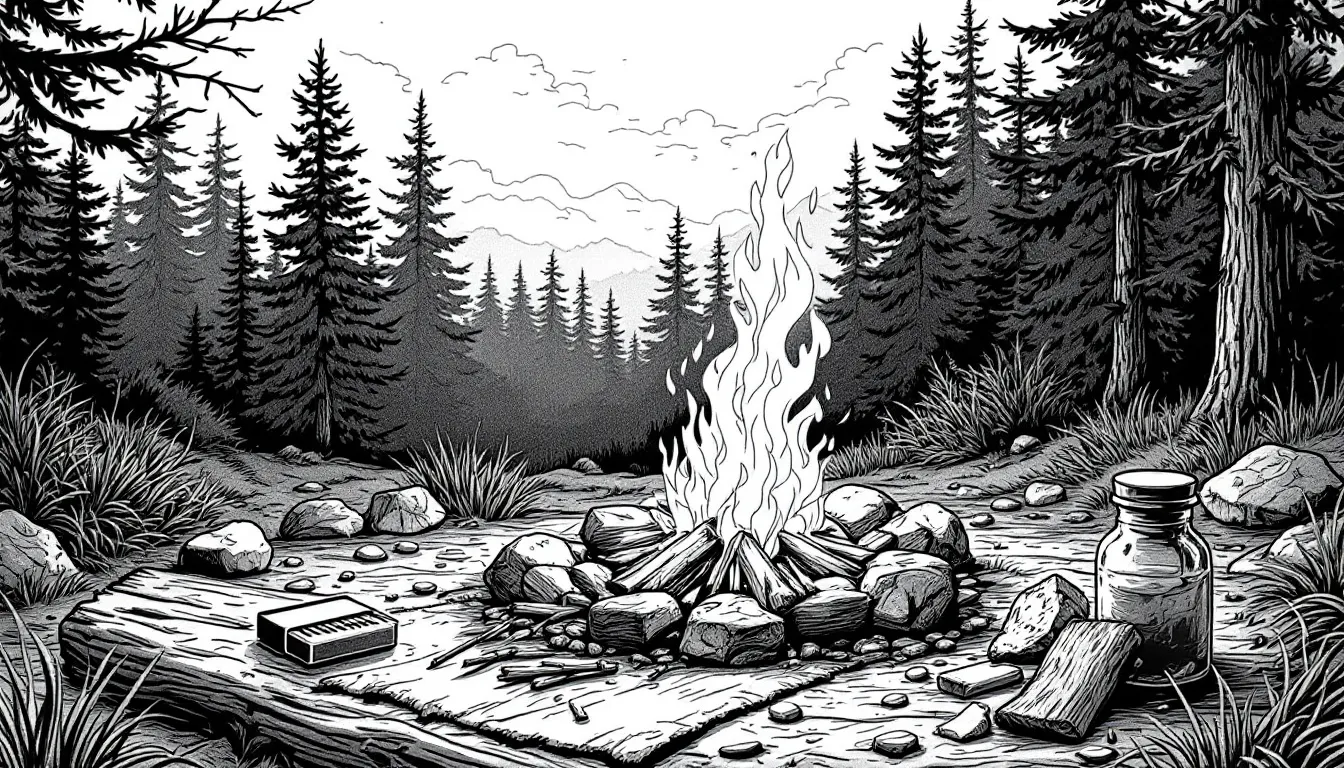
Starting a fire always begins with the right materials. Without the right foundation, your fire will never burn well or last long enough to be useful. The most important supplies for building a fire are:
- Tinder: the material that ignites first, such as dry grass or birch bark, and essential for lighting your fire.
- Thin twigs
- Thicker branches.
After gathering tinder, use thin twigs to get the fire going. These small twigs burn quickly and help spread the sparks. Once the fire is burning well, add thicker twigs to extend the burn time and create a stable fire. So, gathering the right materials is essential for a long-lasting and stable fire.
These basic supplies form the foundation of any fire. Without them, your fire won't burn well, and you'll be constantly working to keep it going. That's why it's important to know how to find and use these materials.
In the following sections, we'll delve deeper into how to gather and use tinder and wood.
Collecting tinder
Tinder is crucial for lighting your fire. It must ignite quickly to effectively start the fire. Ideal materials for tinder include:
- Dry grass
- Birch bark
- Fluff
- Birch bark flakes
- Wood shavings
- Pine needles
In rainy weather it is advisable to look for tinder in dead trees, as these are often drier.
You can make your own tinder by dipping cotton balls in Vaseline. This homemade tinder is particularly effective because it burns for a long time and is easy to make.
Gathering the right tinder is the first step to a successful fire. Always make sure you have plenty of tinder on hand before attempting to light a fire.
Thin twigs and thicker branches
Using thin twigs is the next step in getting your fire going. Start by using small branches and twigs to get your fire going; they burn quickly and help strengthen the fire.
Once the fire is burning well, add thicker branches to extend the burn time. It's important to note that adding larger pieces of wood is only effective once the fire has built up sufficient heat and flame.
By following these steps carefully, you'll ensure your fire stays steady and burns long enough for warmth, cooking, and other purposes.
Types of fire structures
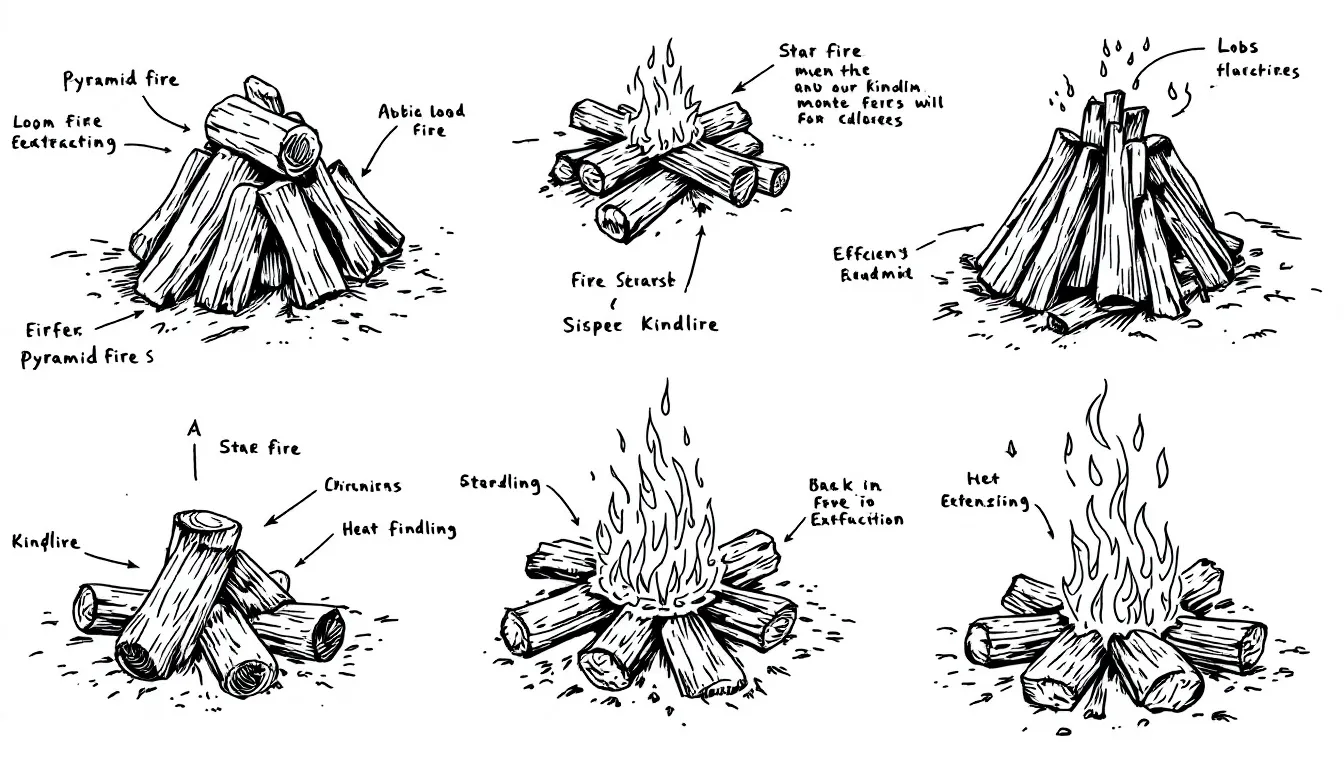
The way you stack your wood can make a big difference in how well your fire burns and how efficient it is. There are various fire structures tailored to specific needs and environments, such as:
- The pyramid fire: Using a pyramid shape for the wood helps with air circulation and the efficiency of the fire.
- The starfireThe reflector fire.
Each of these structures has its own advantages and applications. Whether you want a fire that burns for a long time or one that provides targeted heat, there's a structure to meet your needs. In the following sections, we'll discuss the specific features and benefits of these fire structures.
Pyramid fire
The pyramid fire is designed to create a solid base of larger logs, ideal for long-lasting warmth and cooking. A pyramid fire builds a solid base with larger logs, resulting in a slow and steady burn. This solid base ensures the fire burns for a long time and provides a lot of heat, making it ideal for preparing food and keeping warm in cold conditions.
Building a pyramid fire is simple. Start by placing the largest logs at the bottom and gradually work your way up with smaller branches. This structure allows for good air circulation and efficient combustion. This type of fire is perfect for situations where you need long-lasting, stable heat.
Starfire
The starfire is easy to maintain and suitable for situations with limited fuel. Features and benefits of a starfire:
- Thicker branches are placed in a star shape, which promotes air circulation.
- It makes efficient use of fuel.
- You need to add fuel less often.
- The fire still burns brightly.
The star-shaped arrangement of branches around the fire has the following features and benefits:
- It makes it easy to push the branches towards the center as they burn down.
- This type of fire is ideal for situations where you are limited in the amount of fuel available.
- It is suitable for long hikes.
- It works well in areas with little wood.
Reflector fire
In a reflector fire:
- A reflector is used to direct the heat to the sleeping area.
- Stones or bark are often placed behind the fire.
- Does the fire reflect heat back to your sleeping area through these stones or bark?
- It is ideal for heating a sleeping place on cold nights.
- It effectively directs heat where you need it most.
To build a reflector fire, place rocks or a bark wall behind the fire. This reflector helps radiate the heat forward, increasing the fire's efficiency. This is especially useful in colder climates where direct heat can make a significant difference in your comfort and survival.
Lighters and ignition methods
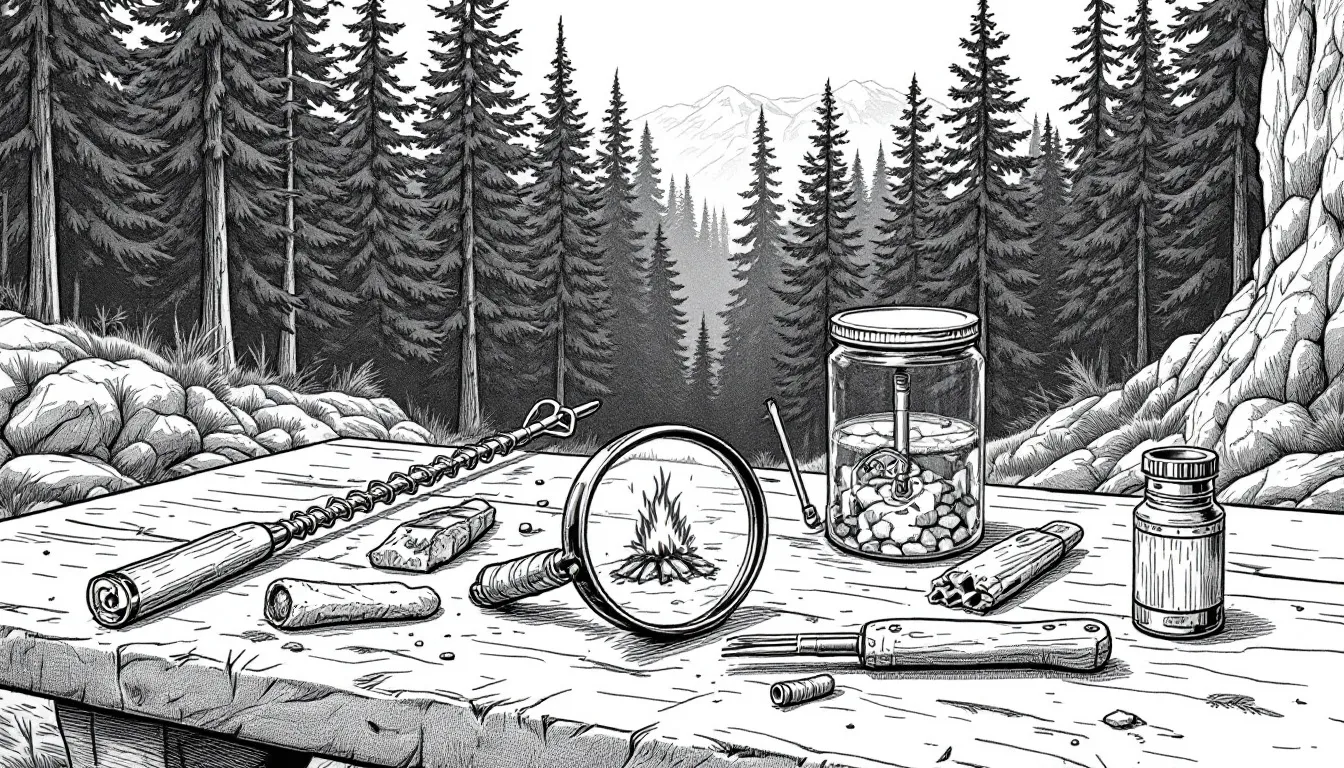
There are several methods for lighting a fire, each with its own advantages and applications. Tinder must ignite quickly to effectively start the fire. Do not use flammable liquids such as gasoline to start the fire, as this can be life-threatening.
In this section, we'll discuss waterproof matches , fire steel and flint, and lighters and Zippos, all reliable methods for starting a fire. Each method has its own specific advantages and can be useful in different situations. Whether you're in a rainy forest or just want to light a fire quickly, there's a technique to suit you.
Let's take a closer look at these methods.
Waterproof matches
Waterproof matches are essential in wet conditions, as they can reliably start a fire despite damp environments. This method is thousands of years old and is often used by survival experts for its reliability. The container contains 25 waterproof matches, which is enough for several attempts to light a fire.
It's always handy to have a supply of waterproof matches with you in case you need to survive in a wet environment. These matches are designed to function even in the most humid conditions, making them an indispensable tool for any outdoor adventurer.
Flint and fireclay
The technique of flint and steel requires:
- Striking a flint with a hard stone or metal to create sparks.
- Generate sparks suitable for lighting tinder, making this method reliable for starting fires .
- Quickly scrape the fire steel across the sharp edge of the flint to generate sparks.
This method is a classic and reliable way to start a fire. By capturing sparks in tinder, you can quickly create a flame that you can then use to light larger pieces of wood.
There are several ways to make a fire with flint, including using marcasite, fire steel, or a fire striker.
Lighter and Zippo
Lighters are easy to use and can quickly start a fire, making them popular for both camping and survival situations. Zippo lighters are popular for their reliability and the ease with which they can start a fire. A Zippo lighter operates by turning a wheel that produces a spark, which ignites the fuse when fuel is available. These lighters are also reusable and function well in various weather conditions.
Make sure your Zippo lighter is properly filled for optimal performance. These lighters are ideal for fast and reliable fire starting, especially in situations where time and convenience are of the essence.
Making fire in difficult circumstances
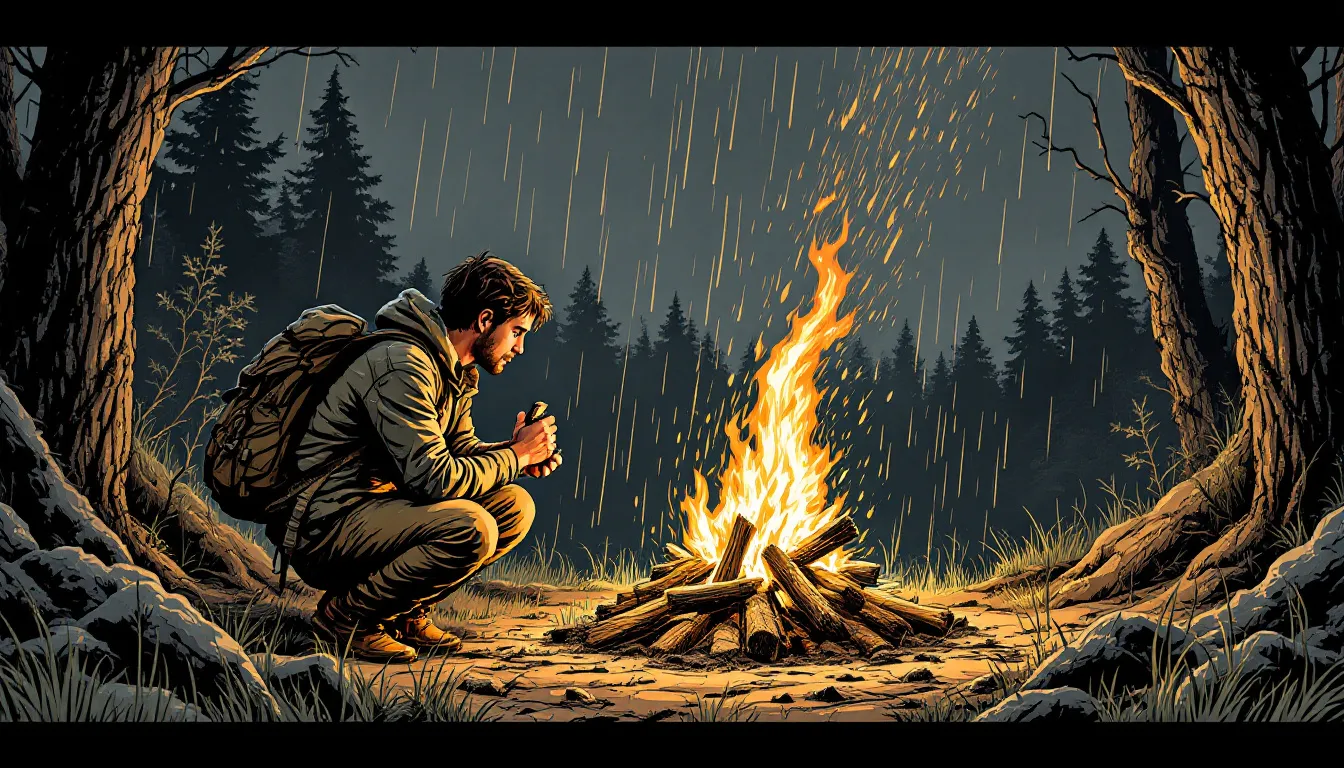
Making a fire can be challenging in harsh conditions like rain and wind. Always use dry wood for optimal combustion. Waterproof matches can start a fire in wind and rain, making them a valuable addition to your survival kit.
In this section, we'll discuss specific techniques for building a fire in the rain and protecting your fire from the wind. By being prepared for these challenges, you can ensure your fire burns well, even in the worst weather conditions. Let's take a closer look at these techniques.
Making a fire in the rain
Making a fire in the rain can be tricky, but it's certainly possible with the right techniques and materials. Here are some tips:
- Look under natural cover such as an overhanging stone or rock for dry wood in wet conditions.
- Use a shelter or natural shelter to protect your fire from the rain.
- This could be a homemade shelter made of branches and leaves or a piece of tarpaulin that you have with you.
Remove the bark from a tree or find a dead tree for dry tinder if everything is wet. Use a knife to reach the inside of a dead tree for suitable tinder. These techniques ensure you always have dry material to light your fire, even in the rain.
Protection against wind
Protecting your fire from the wind is crucial, especially in strong winds, to prevent it from burning out. An effective way to shield your fire from the wind is to use large rocks or tree stumps. These natural barriers help block the wind and keep your fire burning steadily.
Another effective method is to build a windbreak from branches and leaves. This screen can be placed close to your fire to protect the flames from strong gusts. By applying these simple techniques, you can ensure your fire continues to burn well, even in windy conditions.
Safety and regulations
When building a fire, safety is always the top priority. Ensure a safe location for the fire, away from flammable materials. Always check local regulations regarding open fires before starting a fire. In this section, we discuss important safety precautions and the laws you need to be aware of.
It's crucial to maintain a safe distance from flammable materials when building a fire. Open fire regulations vary by region, so it's advisable to consult local regulations before starting a fire.
Safety measures
The following rules apply when making a fire:
- Keep a minimum distance of 10 metres from buildings.
- Keep a minimum distance of 15 metres from highly flammable roofs.
- In some areas, specific locations have been designated where making a fire is permitted, such as official barbecue areas.
In the Netherlands, it is the user's responsibility to handle fire responsibly and comply with local guidelines.
When extinguishing a fire, it's crucial to ensure all ash and coals are properly cooled to prevent re-ignition. Don't build a fire in bone-dry forests or heathlands. These measures help prevent accidents and ensure safe and responsible fire handling.
Legislation and regulations
Always check local regulations regarding open fires before lighting a fire. Make sure your fire can't spread and always have water or sand on hand to extinguish it. Knowing these rules will help you avoid fines and dangerous situations.
It's important to know that some areas have strict rules regarding where and when you can light a fire. By adhering to these rules, you're not only ensuring your own safety, but also that of others and the natural environment around you.
Maintaining and extinguishing fire
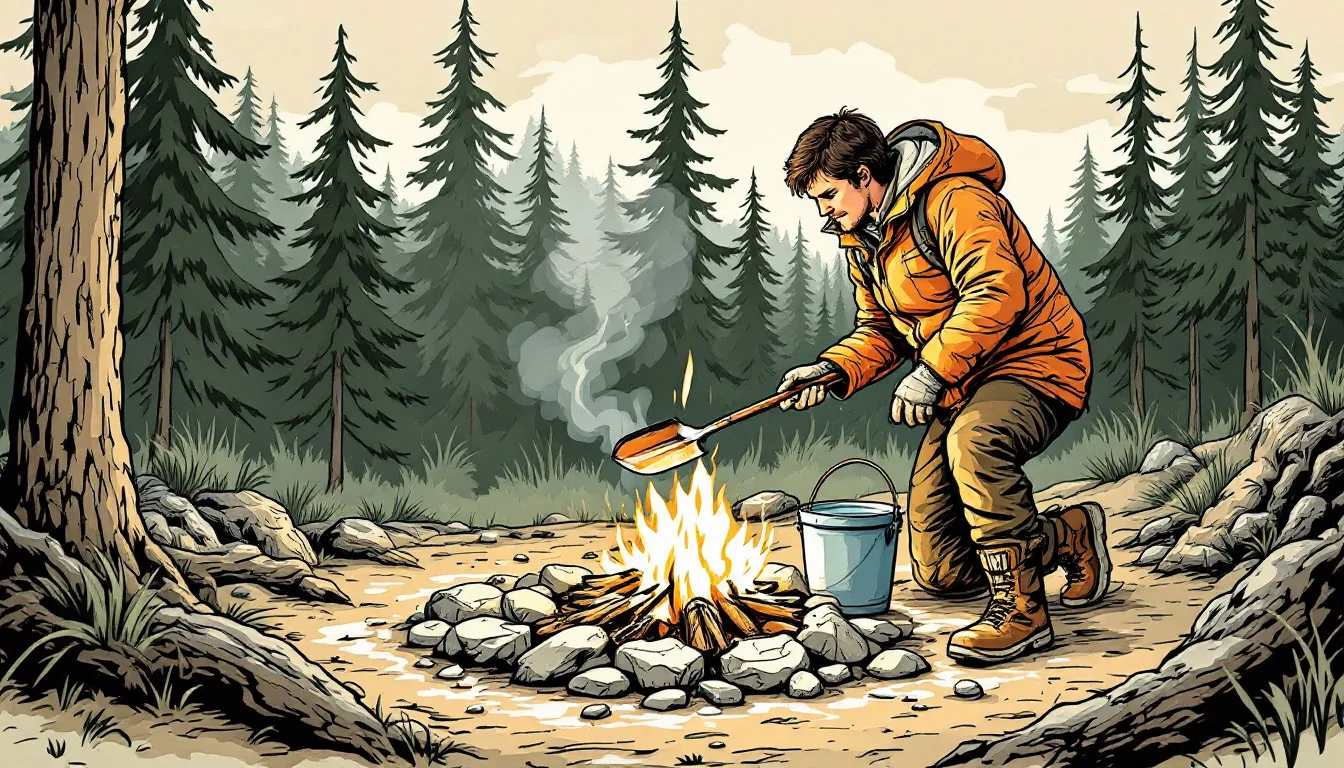
A well-maintained fire requires regular additions of combustible material to maintain the temperature and flames. Properly maintaining a fire is essential for keeping it safe and effective. In this section, we discuss how to feed your fire and how to extinguish it safely.
To effectively maintain a fire, you must regulate the oxygen supply by controlling the airflow. A well-maintained fire needs three-dimensional air circulation to burn optimally.
Always keep a bucket of water or sand nearby in case the fire needs to be extinguished.
Feeding the fire
For a well-burning fire, it's essential to regularly add combustible material. Gather the right materials like tinder, thin twigs, and thicker branches to create a stable fire that will burn for a long time. Start with thin twigs to get your fire going, then add thicker branches for a longer burn.
Learn how to keep your fire going by regularly adding small amounts of combustible material. This will keep your fire burning and keep it going as long as you need it.
Extinguish fire
It's important to completely extinguish the fire by using water and stirring the ashes to ensure no smoldering remains. After extinguishing the fire, it's important to carefully check the ash and debris to ensure there are no smoldering particles left.
Douse your fire completely with water and stir the ashes to ensure no smoldering remains. This prevents the fire from reigniting and provides a safe seal for your campfire.
Summary
Firemaking is an essential skill for anyone who spends time in nature. From gathering the right materials to building various fire structures and using various lighting methods, this guide provides all the knowledge you need to build and maintain a fire.
By following the techniques in this guide, you can ensure your fire burns well, even in challenging conditions. Safety and regulatory compliance are crucial for preventing accidents and protecting the environment. With this knowledge, you'll be well prepared to build a fire safely and effectively in any situation.
Frequently Asked Questions
What's the most important material to start with when building a fire?
The most important material to start with when building a fire is tinder, such as dry grass or birch bark, as these ignite quickly and are essential for starting the fire.
How can I make a fire in rainy weather?
You can build a fire in rainy weather by finding dry wood under overhanging rocks or dead trees and protecting the fire with a shelter. This will help your fires burn effectively despite the rain.
What are the benefits of a pyramid fire?
A pyramid fire provides a solid base and long-lasting heat thanks to the use of larger logs, making it ideal for cooking and extended use. This type of fire guarantees a stable burn time.
What safety precautions should I take when building a fire?
Make sure you maintain a minimum distance of 10 meters from flammable materials and always have water or sand on hand to extinguish the fire. This reduces the risk of accidents and ensures safety.
How can I effectively extinguish my fire?
Extinguishing a fire requires dousing it completely with water and stirring the ashes thoroughly to ensure no smoldering remains. Be sure to check the ashes thoroughly to prevent rekindling.